Small-But-Mighty: How Undersized Hitters Hit Bombs
Key Takeaways:
Power in baseball is a physics problem, not a size contest.
Exit velocity and launch angle—not height—determine home run potential.
Bat speed can outweigh body mass when mechanics are efficient.
Elite sequencing (hips → torso → hands) creates a whip effect that amplifies power.
Hip–shoulder separation stores elastic energy that adds torque to the swing.
Barrel precision multiplies power—clean contact beats brute strength.
Relative strength and power-to-weight ratio matter more than absolute size.
Optimal launch angle (20–35°) plus backspin maximizes carry distance.
Selective aggression and plate discipline increase power outcomes.
Controlled, connected swings outperform frantic “muscle-up” efforts.
Compact, efficient mechanics reduce variability and increase squared contact.
Rotational strength, bat speed training, and sequencing refinement drive power gains.
Video analysis and exit velocity feedback sharpen mechanical efficiency.
Undersized hitters gain an edge by obsessing over execution and detail.
Power is engineered through efficiency, not gifted through size.
Small-But-Mighty: How Undersized Hitters Hit Bombs
He was the shortest kid on the field. Maybe 5'6" on a generous day. The other team had a first baseman who looked like he shaved twice before BP.
Top of the third. Two strikes. Fastball middle-in.
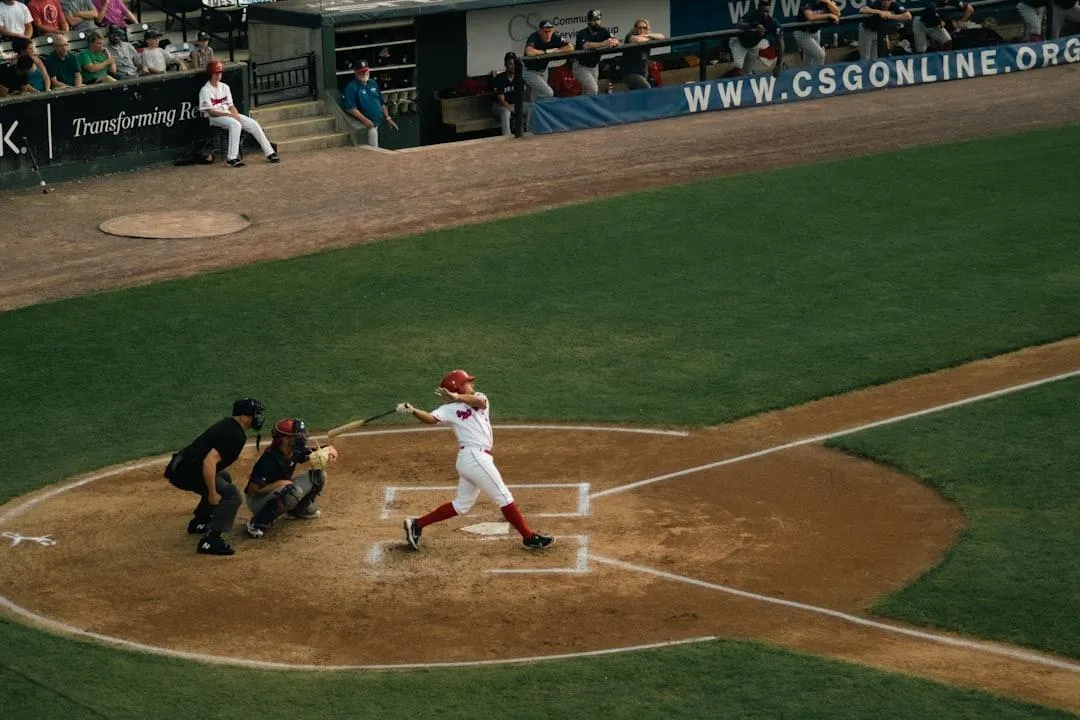
The small kid didn’t try to lift it. Didn’t try to muscle it. He turned. The ball left his bat at a sound that made every coach look up.
Gone.
The dugout went quiet for a second—not because it was surprising he hit it hard. Because it challenged a belief we all carry:
Power belongs to size.
It doesn’t.
Size helps. No one denies that. Longer levers can create larger swing arcs. More mass can generate more force. But power in baseball isn’t a weight-room contest. It’s a physics problem. And physics doesn’t care how tall you are.
It cares how efficiently you move.
This is the blueprint behind small-but-mighty hitters—the athletes who don’t look imposing but hit bombs anyway.
The Myth: Do You Have to Be Big to Hit Home Runs?
Search “how to hit more home runs” and you’ll see the same advice repeated: get stronger, add weight, bulk up.
Strength matters. But raw size is not the same as usable power.
Home run power depends on exit velocity and launch angle. Exit velocity is the speed of the baseball off the bat. Launch angle is the vertical angle at which the ball leaves the bat. When exit velocity and launch angle combine correctly, the ball carries.
Neither metric directly measures height.
What they measure is force transfer and bat speed.
A smaller hitter who creates elite bat speed and squares the ball consistently can produce exit velocities that rival larger athletes. The difference isn’t muscle mass alone. It’s efficiency.
Big hitters can waste movement and still get away with it. Small hitters can’t.
So they get better at the parts that matter.
What Actually Creates Power in a Swing?
Power in a baseball swing comes from rotational force, bat speed, and quality of contact.
Rotational force starts from the ground. The hitter loads into the back hip, drives into the front side, and rotates through the torso. This is hip–torso sequencing.
Bat speed is the angular velocity of the bat around the body’s axis. Higher bat speed increases potential exit velocity.
Quality of contact depends on barrel control and timing. Squaring the ball at the sweet spot maximizes energy transfer.
When smaller hitters hit bombs, they excel at these three variables.
They don’t overpower the ball.
They out-sequence it.
How Does Bat Speed Compensate for Size?
Imagine two hitters.
Hitter A is 6'3" and 95 kg. Hitter B is 5'8" and 70 kg.
If Hitter A swings at 70 mph and Hitter B swings at 80 mph, the physics equation shifts. The faster bat creates higher exit velocity even with less mass behind it.
Bat speed is king.
Smaller hitters often develop higher relative bat speed because they learn to move efficiently. They can’t rely on mass, so they refine mechanics.
They minimize excess movement. They control the barrel path. They stay connected longer.
Speed beats size when speed is clean.
Sequencing: The Hidden Equalizer
Sequencing refers to the order and timing of body segment rotation during the swing. Hips rotate first. Torso follows. Arms and bat whip last.
When sequencing is correct, energy transfers from larger body segments to smaller ones. This creates a whip effect.
Smaller hitters who hit for power often demonstrate elite sequencing. Their hips lead aggressively. Their torso delays slightly. Their hands stay back before accelerating.
This creates stretch across the trunk muscles—sometimes called hip–shoulder separation. That stretch stores elastic energy.
When released, it adds torque to the swing.
If sequencing is off, the hitter loses that stored energy. Larger hitters may compensate with brute force. Smaller hitters cannot.
So they learn sequencing.
They make timing their weapon.
Barrel Efficiency: Why Clean Contact Beats Muscle
The barrel is the sweet spot of the bat. When the ball contacts the barrel, energy transfer is maximized.
Undersized hitters who hit bombs are often elite at barrel control. They keep the barrel in the hitting zone longer. They match plane with the pitch. They minimize glancing blows.
Barrel efficiency means less wasted energy.
A mis-hit by a large hitter might still travel far. A mis-hit by a small hitter dies on the warning track.
So the smaller athlete becomes precise.
Precision multiplies power.
What Is Relative Strength and Why Does It Matter?
Relative strength refers to strength in proportion to body weight.
An undersized hitter with high relative strength can generate powerful ground reaction forces. That means better force production during hip rotation.
Relative strength often shows up in movements like single-leg stability, rotational medicine ball throws, and explosive jumps.
Smaller athletes who train intelligently can develop high relative power outputs. They may not move the heaviest weights in the gym, but they move their own body—and the bat—quickly and explosively.
Power-to-weight ratio matters more than absolute size.
Launch Angle and Ball Flight: Smart Power
Hitting bombs isn’t just about hitting hard. It’s about hitting at the right angle.
The optimal launch angle for home runs typically falls between 20 and 35 degrees, depending on exit velocity.
Undersized hitters often develop an approach that emphasizes backspin and line-drive carry. They avoid steep, inefficient uppercuts. They create a slightly upward attack angle that matches the pitch plane.
Backspin increases carry distance. A ball hit at 100 mph with clean backspin can travel far, even off a smaller hitter’s bat.
Smart power is controlled power.
It’s not swinging for the fences every pitch. It’s squaring the ball with intent.
How Does Approach Influence Power for Smaller Hitters?
Approach is the hitter’s decision-making strategy at the plate.
Undersized power hitters rarely chase marginal pitches. They hunt pitches they can drive.
They understand zones. They anticipate counts. They attack mistakes.
Plate discipline allows them to swing aggressively at the right pitches instead of defensively at everything.
This selective aggression increases the chance of optimal contact.
You don’t need 110 mph exit velocity if you consistently hit 98 mph lasers at the right angle.
Power is as much about pitch selection as muscle.
The Psychological Edge of Being Undersized
Here’s the interesting twist.
Smaller hitters are often underestimated. That shapes how they train and compete.
When you know you can’t rely on intimidation, you focus on execution.
You refine mechanics. You study pitchers. You obsess over timing.
There is a chip on the shoulder.
And that chip becomes discipline.
The psychology of the undersized hitter often includes higher attention to detail and higher tolerance for skill development.
They know they must earn power.
So they do.
Training for Small-But-Mighty Power
If you are an undersized hitter who wants more power, the path is clear.
First, build rotational strength and explosiveness. Medicine ball throws, rotational lifts, and single-leg strength work develop force production.
Second, train bat speed specifically. Overload and underload bat training, when done safely and progressively, can improve swing speed.
Third, refine sequencing. Video analysis helps identify early torso rotation, arm-dominant swings, or collapsed posture.
Fourth, practice quality contact. Tee work and front toss with exit velocity feedback sharpen barrel control.
Fifth, improve approach. Understand your hot zones. Know what pitch you drive best.
None of these require adding 10 kg of body mass.
They require intention.
Why Trying to “Swing Harder” Backfires
Many smaller hitters make one critical mistake: they try to muscle up.
They overswing. They lose balance. They pull off the ball.
The result? Reduced contact quality and lower exit velocity.
Effort without structure kills power.
The body must stay organized. The head must stay stable. The swing must stay connected.
The hardest swings often look the smoothest.
Controlled violence beats frantic effort.
Case Study Pattern: The Compact Power Profile
When you analyze successful undersized power hitters, you see recurring traits.
Compact load. Efficient stride. Strong front side stability. Explosive hip rotation. Late hand acceleration.
They don’t have long, looping swings. They don’t waste movement.
Their swing path is direct but slightly upward. Their finish is balanced.
This is not accidental.
Compact mechanics reduce variability. Reduced variability increases consistency. Consistency increases squared contact.
And squared contact drives home runs.
The Long Game: Development Over Ego
Here’s the bigger lesson.
Undersized hitters who hit bombs don’t rush the process. They commit to development.
They don’t chase highlight swings. They build foundations.
They focus on strength, mobility, timing, and understanding the strike zone.
Over time, those investments compound.
Power appears gradual, then sudden.
What looks like overnight pop is usually years of refined mechanics.
The Counterintuitive Truth About Power
Power is not about looking powerful.
It is about transferring force efficiently.
Size can help. But inefficiency cancels size.
Smaller hitters who understand physics, sequencing, and contact quality can match or exceed bigger athletes who rely on raw strength alone.
The small-but-mighty hitter isn’t defying the laws of power.
He’s obeying them better.
So if you’re undersized and dreaming of hitting bombs, stop asking how to get bigger first.
Start asking how to move better.
Because in baseball, power isn’t given.
It’s engineered.
FAQs
1) How can undersized baseball hitters hit home runs without being big or heavy?
Undersized hitters can hit home runs by maximizing efficiency, not size—specifically by improving bat speed, hip–torso sequencing, and quality of contact (barrel control). The article argues power is a physics and force-transfer problem, where efficient movement can produce elite exit velocity even with less body mass.
2) What creates power in a baseball swing according to “Small-But-Mighty: How Undersized Hitters Hit Bombs”?
The article identifies three main drivers of swing power: rotational force, bat speed, and quality of contact. Rotational force starts from the ground and transfers through the body via hip–torso sequencing. Bat speed increases exit velocity potential, and clean contact (barreling the ball) maximizes energy transfer.
3) Why is bat speed considered the “king” for smaller hitters?
Because higher bat speed can increase exit velocity even when the hitter has less mass. The article compares a larger hitter swinging slower versus a smaller hitter swinging faster and states the faster bat can shift the physics outcome—especially when the swing is “clean” (efficient, connected, minimal wasted movement).
4) What is sequencing in a baseball swing, and why does it matter for undersized power hitters?
Sequencing is the order and timing of rotation—hips first, torso second, arms and bat last. The article calls sequencing a “hidden equalizer” because correct sequencing creates a whip effect and builds hip–shoulder separation, storing elastic energy that adds torque when released. Smaller hitters rely on this because they can’t compensate for poor sequencing with brute force.
5) What is barrel efficiency, and how does it help smaller hitters generate more power?
Barrel efficiency means consistently striking the ball on the barrel (sweet spot), matching the pitch plane, and keeping the bat in the hitting zone longer. The article argues this reduces wasted energy: a big hitter might still get distance on a mis-hit, but an undersized hitter typically won’t—so precision becomes a power multiplier.
6) Which training methods does the article recommend for “small-but-mighty” hitting power?
The article recommends:
Rotational strength and explosiveness (medicine ball throws, rotational lifts, single-leg strength)
Bat speed training using overload/underload methods (safely and progressively)
Sequencing refinement using video analysis (fix early torso rotation, arm-dominant swings, posture collapse)
Contact quality practice (tee work and front toss with exit velocity feedback)
Approach improvements (hot zones, pitch selection, disciplined aggression)
7) Why does trying to “swing harder” often backfire for undersized hitters?
The article explains that overswinging leads to lost balance, pulling off the ball, and worse contact—reducing exit velocity. It frames this as “effort without structure kills power,” emphasizing that the most powerful swings tend to look smooth because the body stays organized and the barrel stays connected through the zone.


